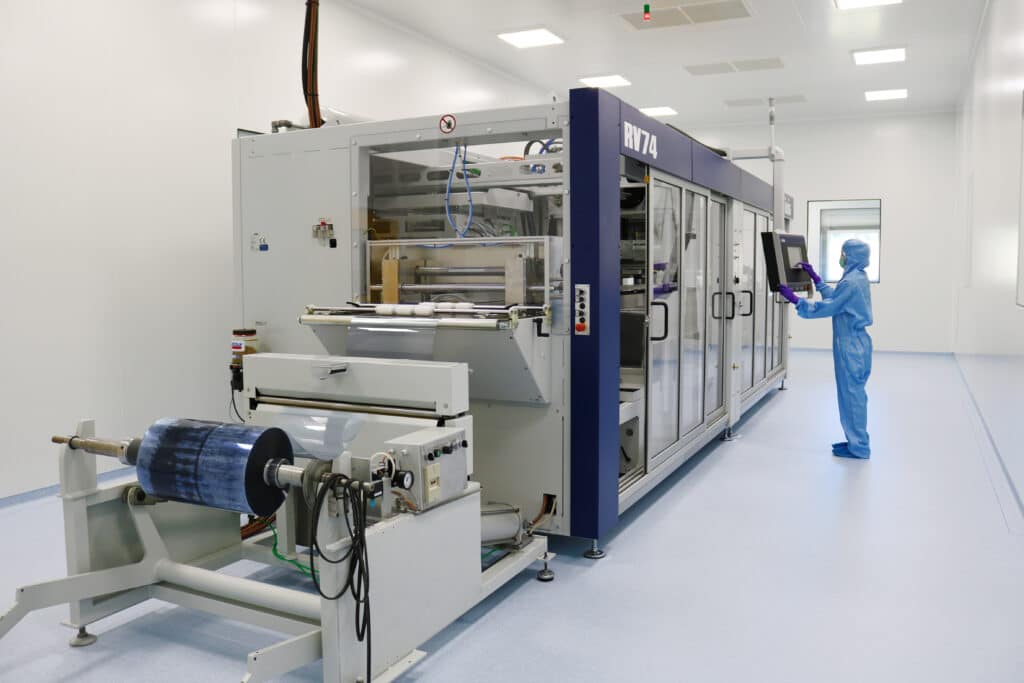
Thin-film thermoforming

Thermoformage fine épaisseur

This technique is applied to semi-finished thermoplastics such as films, sheets and plates, to transform them into 3D objects. The use of this process results from the behavior of thermoplastic materials, which take on a rubbery consistency above their transition temperature and can therefore be easily formed and frozen in this state by cooling.
Choosing the right thermoforming method depends on :

  • Deformation to be imposed
  • The shape of the object to be manufactured
  • The nature of transformed matter
  • The thickness of this material
  • Economic resources: machines, molds, number of series…

Step 1

Coil

Step 2

Preheating

Step 3

Heating

Step 4

Forming

Step 5

Cutting

Step 6

Stacking

Step 7

Picking & Packing

Advantages of thin-film thermoforming

  • High speeds
  • Shorter warm-up time

  • Wide range of applications

  • Round shapes and designs can be developed more easily

  • Lower tooling costs than injection molding

Product types

  • Injector pen settings
  • Syringe blisters
  • Prosthesis blisters
  • Fitted boxes
  • Trays
  • Trays
  • Boxes
  • Displays
  • Shims
  • Pill dispenser
  • Templates

The benefits of plastics in packaging

  • Sterility: Our medical solutions are manufactured in ISO 7 & ISO 8 cleanrooms certified to ISO 13 485.
  • Safety: Our solutions offer reliable and secure cushioning, ensuring optimum protection for medical devices throughout their use and transportation.
  • Lightweight: Plastic packaging is lighter in weight than other materials such as glass, and above all, it consumes less energy.
  • Transparency: Many plastics are transparent and translucent, giving a high-quality image while ensuring product visibility, such as APET and polycarbonate.
  • Inalterability: Plastics are highly resistant to external aggressions (humidity, microorganisms, etc.).
  • Design & ergonomics:
    The infinite variety of shapes, attractive appearance and colors make it possible to create the most attractive packaging for all kinds of needs.
  • Impermeability:
    even in thin layers, plastics are a serious barrier to moisture and gases. The combination of different lids (PGL, tyvek, etc.) reinforces this function.
  • Natural asepsis:
    during processing, plastics are heated to between 110°C and 190°C. This temperature, combined with ISO 7 & ISO 8 production environments, limits packaging contamination.
  • Recyclability: All plastic materials are recyclable, and some are recycled.

Your partner for customized, environmentally-friendly packaging

  • A range of customized solutions, perfectly tailored to your needs
  • Innovations designed to reduce the environmental impact of your products, offering polymers where possible and incorporating 50% recycled PETG PCR (Post Consumer Recycled) or bio-sourced materials such as Bio PET.
  • Industrial workshops and a dedicated team to support your projects
  • An extensive range to cover a variety of mixed solutions (cardboard + transparent window)
  • Flexible and rigid, multi-technology solutions for ready-to-use applications
  • ISO 7 & ISO 8 cleanrooms for safe production

For further information